#1
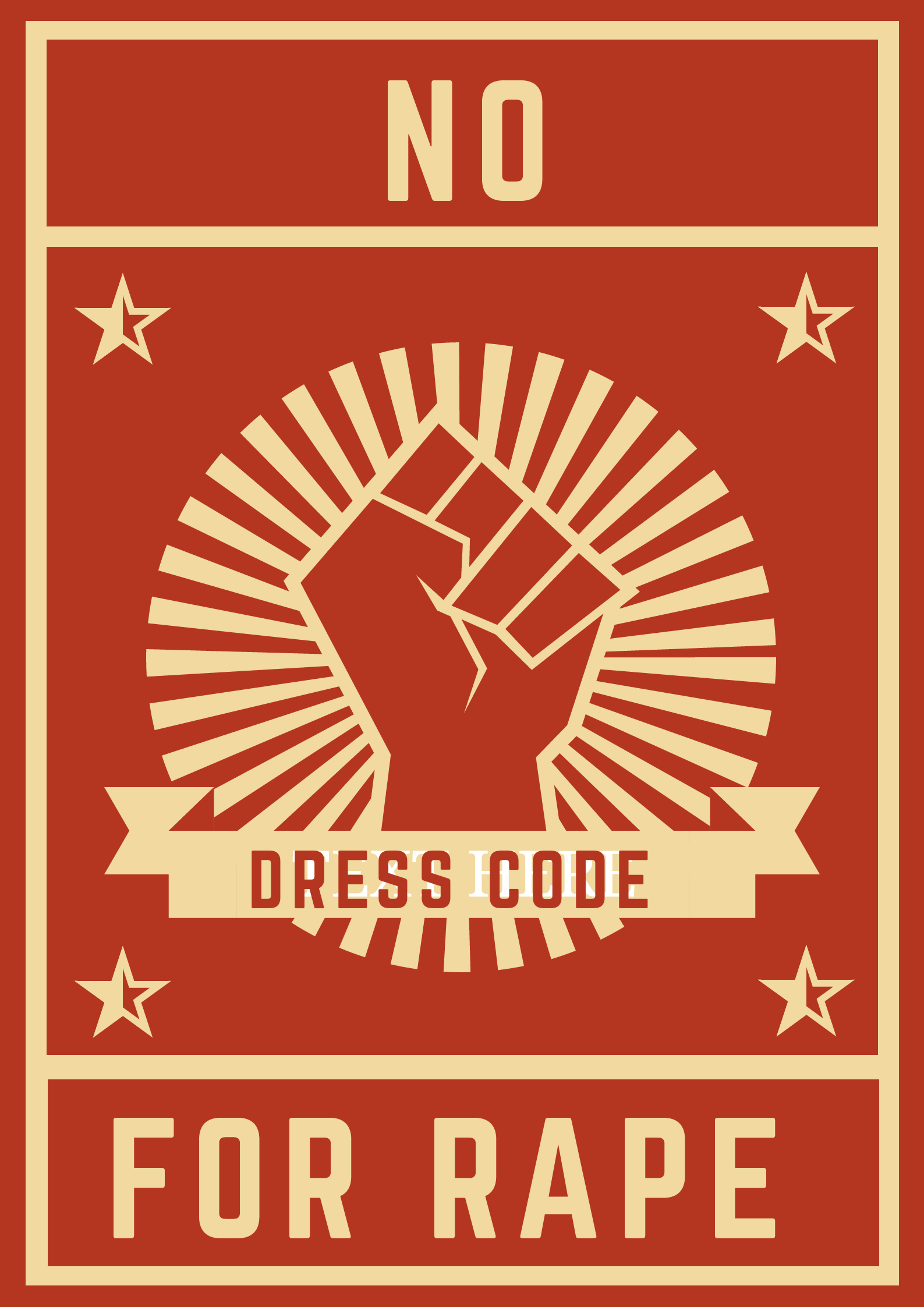
Women should not reduce the complexity of their body. equating their characters to how they dress has been a damaging way to deny women their humanity. Rape victims are being interrogated and investigated just because of what they are wearing and posting online but how could shorter skirts or shorts be a measure for consent? Modesty shouldn’t be a prerequisite for respect and it shouldn’t be the sole indicator of self-respect. Just because a woman chooses to have sex with more people than the average person doesn’t give us the right to call her a slut — especially since we praise men who do the same. We might think we’re a sex-positive, progressive person, but we’ve all contributed to rape culture by calling someone else’s dress “a little slutty.” We’re validating the people who say that women “ask for it” when they wear revealing clothing or have many sexual partners. A woman’s clothing shouldn’t cause rape. Clothes don’t cause rape, rapists do.
#2
The idea that women must present themselves in a way that caters to the male gaze. Women must act as if men are looking for reasons to take advantage of them. We get angry that some Muslim women are expected to wear hijabs, but we still send girls home because their skirts don’t hit their knees. It’s a contradiction. We still want to control what women wear. Christin Bowman, a PhD candidate for critical social-personality psychology at CUNY, says we contribute to rape culture “when we create school dress codes for teenagers because apparently the natural female form is ‘distracting’ for male students and teachers.” dress codes should not support rape because no matter what women are wearing it isn’t a consent to sexually violate them. Some schools today have dress code rules that range from nonexistent to virtually impossible for young women to follow. Some of this rules are too much to the point they deny women freedom to express their fashion. Although, some of this dress codes rules are also adequate.
 No dress code for rape